Mr. Bradley Hagstrom, 5th Grade Teacher at Issaquah Valley Elementary, Washington, hagstromb@issaquah.wednet.edu
Thursday, March 2, 2017
Wednesday, March 1, 2017
Wednesday, March 1
Today We Are Learning:
Date: Wednesday, March 1
Subjects
|
Learning Targets
|
Notes:
|
Drawing and interpreting fractional models for word problems.
|
HW Lesson 6 - p.100 only
| |
Reflection on Weedflower and/or Milkweed.
|
This may partially satisfy the writing homework listed on the week 24 literacy homework sheet.
| |
Sentence writing with predicate adjectives and our weekly vocabulary.
| ||
Confirming one another's thinking on read aloud texts.
**District Reading Assessment -Post test
| ||
Social Studies
|
S.S. - Topics in diversity and inclusion in America and Europe during WWII.
| Integrated into our literacy study. |
Discussion of Milkweed and Weedflower: issues of prejudice, poor treatment of others
|
Part of our study of cultural inclusion through comparative literature.
|
Monday, February 27, 2017
Monday, February 27
Today We Are Learning:
Date: Feb. 27
Subjects
|
Learning Targets
|
Notes: Success Criteria/ Big Picture/ Unit of Study/ Purpose / Homework
|
I can use tape diagrams to model fractions as division.
|
Math Lesson 4 HW through problem 3.
| |
I can write sentences with our new vocabulary and grammar focus.
| ||
I can understand and use knave and extrovert. I can understand plural possessive apostrophes.
| ||
I can use “stop and ask questions” to think about a story.
**Become aware of my inference making.**
***Confirm another’s thinking
| We are using the speech frame: I heard you say, __________. Did I get that right? We are reading Van Gogh's Cafe for illustration of the inference and confirmation topics. | |
Social Studies
|
I can collaborate with my team members, record details of an experiment, and report results.
** I can relate my marble drop experiment to Newton’s Laws of motion.
|
We are preparing to design bolt catchers by considering Newton’s laws, forces, mass, and motion.
|
Special
|
Reading Weedflower. Understanding history; building community; family and friendly affection
|
Successfully talking about connections and sharing.
|
Academic Calendar and Connections for the week beginning Feb. 27
Monday
Read Aloud: Weedflower: Family relocated to AZ desert emcampment; Sumiko prefers to eat snake to cow toungue and Bull builds Tak Tak a cricket cage.Math Lesson 4 HW
Science: Continuation of Boeing Science Unit; record - keeping, data analysis, team conversation & collaboration; review of Newton's laws of motion.
Tuesday:
Permission slip forms were sent home on Tuesday for the visit to Middle School on this coming Monday. For reference, prior to the break,a yellow informational handout about the field trip was sent home with your student. We would like these returned as soon as possible..
Thank you,
Mr. Hagstrom
Math HW Lesson 5, problems 2-3
Issaquah Middle School Music Program Introduction in Multipurpose room: (Band, Choir, and Orchestra's perform and middle school students and teacher share program information with 5th grade students.
Wednesday:
District Reading Assessment
Math HW Lesson 6, p. 100
Collecting Field Trip Permission Slips for next Monday's visit to Issaquah Middle School
Thursday:
Collecting Field Trip Permission Slips for next Monday's visit to Issaquah Middle School. 25 of 28 students have turned these in as of this morning.
Math: Lesson 7: See HW help for a few completed problems for the Lesson 7 HW
Math differentiation groups: Zearn Computer; restudy group worked on presenting fractions as tape diagrams. Advanced group worked on Perennial math.
Writing: Researching for our Feature Article Reports. Research note pages provided and explained.
Science to Go: 12:40 - 1:30: Fossils
Boeing Project: Mini-session. Reflecting, writing, and drawing on design for bolt catchers
Friday, February 10, 2017
Special Things, including snack policy
Tonight is Multi-cultural night; hope to see you there.
Here is the link to the PTA News.
Valentine's Day Snacks:
It was brought to my attention that we (the school, classroom, and families) need to be careful to closely follow the District Policies around Snacks in the classroom. We are encouraging that all shared foods are healthy ones. For our classroom party on Tuesday, grain-based snack foods should be whole grain rich. Here's the link to Principal Walsh's message.
Birthday Snacks
Also, the school has a policy that birthday celebrations cannot be accompanied by treats from the family. Your generosity and kindness in wanting to share small treats throughout the the year is much appreciated, but is restricted as written in the school handbook. Thank you for your understanding!
Wednesday, February 8, 2017
Food Drive
Food Drive February 13-17
Two outstanding fifth grade students approached Mrs. Walsh about doing a service project. The school decided on a food drive and PTA was quick to jump in and offer support. IVE students will collect food during the week of February 13-17. This Food Drive is to help support the food over break program. Each grade level will focus on different items.
Kid mail will go home on Monday, February 6 and boxes with tally sheets will be delivered on Friday, February 10.
- Kindergarten = Oatmeal, Progresso canned soup or Chunky soup
- First Grade = Granola bars, canned beans or boxed crackers
- Second Grade = boxed cereal, fruit or applesauce cups or jelly
- Third Grade = Peanut butter, macaroni and cheese or cup of noodles
- Fourth Grade = Juice boxes and corn or flour tortillas
- Fifth Grade = Canned chicken or tuna and canned pasta
Monday, February 6, 2017
Academic Calendar & Connections week of February 6
Below find selected studies and activities taking place in your child's classroom that may help students with their organization and planning, and for families to communicate about some important and special things happening in the classroom.
Monday, February 6 Snow Day!
Hope you're all finding time for snow fun! We have.**
Some of you are thinking ahead to our Math Test no. 3 this week and enjoying extra time on Zearn. Smart!
***
Others are thinking about getting ahead on your book report, right? That link on the right to Mr. Arthur's site only shows an example paper and doesn't have the list of questions I handed out in class. I have now posted these under the new link, "Homework Help."
As an alternative to the paper based on 8 questions, here is another acceptable format to help you organize your paper:
Book Report 2 alternative frame for organizing the report:
1. In an opening paragraph briefly summarize the topic/period/event covered.
2. Optionally continue a summary of significant events/persons in a second or even third paragraph.
3. What is the event that was most striking to you in the story? Be descriptive, elaborate, and explain to the reader why it fascinated you.
4. Do the same as in no. 3, but focus on a person.
5. Close on a paragraph discussing a key learning or two that you took away from reading the book. Make a comment on how you enjoyed the genre of (nonfiction history or historical fiction). Recommend the book (or not) with a reason or two why. Comment on whether the experience was meaningful or satisfying for you and tell me if it has sparked your curiosity to read further on a related topic.
Enjoy this exercise!
Mr. Hagstrom
Tuesday, Feb. 7
Math: Please see the examples of unit test 3 questions for the Unit 3 test dated February 6.
Wednesday, Feb. 8
Language Arts: Began Feature Article Unit in Writing.
Math Homework geared especially to prepare for the Unit test.
Exit Tickets 6, 11, and Homework
13
Homework 13 do: 1.a b, 2 ab
and 3a &b.
Selected answers are provided in
"Homework Help" today.
Thursday Feb. 9
Math Unit 3 Test
Friday, Feb. 10
Community: A group of students at recess learned a style of Friendship bracelet making from Maysa. Mrs. St. Andre provided the thread. These students will, in turn, teach other students how to make the bracelets. Students are excited about the prospect of making friendship bracelets, particularly to refugees from countries with armed conflict.
All students are welcome to participate in the making of friendship bracelets, an act intended to support on-going and current humanitarian issues, irrespective of political or religious beliefs.
Science: Newtons Laws of Motions - Preparation reading and notes
We began our New Science journal
Introduction to our Engineering Unit "Bolt Catchers" on Force, Mass, and Motion
Language Arts:
Journal reflection writing on Weedflower and Milkweed.
Time for Consideration of Feature Writing / Research Reports
Math:
Pretest for Unit 4
Optionally: Zearn Individualized Computer Learning
Perennial Math Group with Mr. Morris
Friday, February 3, 2017
Academic Calendar and Connections Week of Jan. 30
Monday, Jan. 30 Teacher Work Day. Non-student day.
Tuesday, Feb. 1
Anti-bullying Assembly
Math: Eureka Lesson 11
Graphic Novels and Character Analysis
Wednesday, Feb. 2
Math lesson 12
Read Aloud from Weedflower
Thursday, Feb. 3
Eureka Math Lesson 14, includes HW
Kick off our Physical Science unit. Entering into a study of matter, forces, and motion.
Continuation of Character Analysis in Graphic novels.
Read Aloud from Milkweed
Global Reading Challenge. Congratulations to #Emojis and Super Sixlets teams, who have members from our class. They advance to the King County Final along with 3 other teams.
Friday, Feb. 4
Math: Homework and Exit Ticket Analysis and rework for Unit 14
Math lesson 13, problem set
Perennial Math students with Mr. Morris
Zearn Computer time for a group of students who mastered the lesson early.
Science: Introduction to Forces and Motion Science Unit, Reading preparation.
We celebrate Addison G.'s and Maysa's Birthdays.
Friday, January 27, 2017
museum-exhibitions/remember-the-children-daniels-story
Discussion opportunity with your child
We are supporting our Read Aloud, Milkweed, with contextual information about the treatment of Jewish children, with age and grade appropriate information from the U.S. Holocaust Memorial Museum in Washington.
We watched a video on the lives and treatment of Jewish children in Germany during WWII , then discussed, reflected, and wrote or drew our reactions.
For more information please visit:
https://www.ushmm.org/information/exhibitions/museum-exhibitions/remember-the-children-daniels-story
Wednesday, January 25, 2017
Academic Calendar and Connections for the Week beginning January 23
Monday
Descriptive Writing Peer Review: Topics: Structure and Senses; Vote and Promote
Graphic Novels: PIQSi Talks - Predict, Infer, Question, (Speculate or Summarize), and Cite evidence in like-novel groups.
Tuesday
Descriptive Writing Peer Review: Topics: active verbs, transitions, hooks; Vote and Promote
Graphic Novels: Book exchanges, Central Message Exit Tickets
Reading of Milkweed
Wednesday:
Math: RDW problem organizational focus
Musical Dress Rehearsal
Reading of Addison Hackney's Essay: "Hawaiian Beaches"
Homework: Math Zearn; Goal Complete Lesson 8 or work toward this.
(Note, Zearn has the ability to set students into topics, and for students who were on a different topic, and not ahead, I moved them to Mission 3; Adding and Subtracting Fractions Pictorially. I cannot refine the setting to a particular lesson however. I had wanted all students to work lesson 8 tonight, but once in Mission 3 lesson 3+, they'll have to work their way to 8 on their own.
Thursday:
Math: Eureka Lesson 9,
Adding mixed numbers and representing work on a number line.
HW Select problems from Lesson 9 & 10s HW Sheet
Perennial Math Group took test.
Reading/Writing: Graphic Novels: PIQSci Conversation, Evidence Based
Read Aloud: Weedflowers: The Japanese Family is forcibly relocated to a processing center
Reflexive Pronouns
Wright Brothers Presentation: 6:30.
Friday:
Math: Eureka Lesson 10
RDW Focus
Language Arts with Social Studies Integration
Character Comparison in Graphic Novels
Written response to "Remembering the Children: Daniel's Story:
https://www.ushmm.org/information/exhibitions/museum-exhibitions/remember-the-children-daniels-story
Read Aloud: Milkweed: Misha is ridiculed and kicked by German school kids for riding a Merry-Go-Round. He scavenges and delivers "black-pearls" to an orphanage
Indefinite Pronouns
Video: https://www.ushmm.org/information/exhibitions/museum-exhibitions/remember-the-children-daniels-story
Thursday, January 19, 2017
Stickers for Sox Can be Accepted up to January 23
The third grade community service project is a worthwhile action that I'd like to support.
We have until Friday to collect new socks. White and colored sox are fine. So far we have received few. I'd think communication and timing is much the cause.
As an incentive, through Friday, I'm offering one sticker for every 2 pairs you bring in for homeless. A student can earn 3 stickers, but may bring in more than 6 pairs of socks should they wish.
Thank you,
Mr. Hagstrom
Wednesday, January 18, 2017
Math Olympiad
Dear Families,
Mr. Arthur, fellow 5th grade teacher, will be leading a Math Olympiad program after school.
Registration flyers were sent home with your student. Here is the information:
Mr. Arthur, fellow 5th grade teacher, will be leading a Math Olympiad program after school.
Registration flyers were sent home with your student. Here is the information:
What is it: Math Olympiad is open to all 5th graders who want to join. Students who enjoy math and problem solving will probably enjoy Math Olympiad. Most kids end up telling us this was a positive and memorable experience where they got to learn math skills they don’t get to learn in regular 5th grade lessons.
Students will work in groups of 3 or 4 to solve the problems in that week’s lesson. We will check answers together toward the end of the session. Each student has a homework/practice sheet that contains a short chapter to read and 21 problems to complete at home. We encourage students to do as many as they can.
If your student does not like math, struggles with math, or doesn’t like to work in small groups, this program is probably not right for them. It is fine to try the first few sessions and change your mind; however once a student has decided to stay on the team, we expect him or her to make every reasonable effort to stay in until the end.
Meetings: We will meet 11 times on Tuesdays after school in Mr. Arthur’s room beginning January 24th.
Time: 3:00 to 4:00pm. Participants need to be picked up promptly at 4pm.
Snacks: It is fine to send a snack or send snacks for the group. Please ask Mr. Arthur about any students with allergies.
Competition: The date for the competition is Saturday, April 29th in the Bellevue/Seattle area, and typically runs from 8:15am to 1:30pm. The IVE PTA pays for our registration. Students get a t-shirt and work in assigned teams of 3-4 students. They will compete against 5th graders from around the Seattle area. The coaches are mostly focused on making this an enjoyable, positive learning experience for kids. It is not a high-pressure situation and we are not focused on winning trophies or medals.
Academic Calendar and Connections for the Week of January 17
Monday, January 16, MLK Day, No School
Tuesday, January 17
Math: Perennial Math Members with Mr. Morris
Math Make-ups
Zearn Math (For reference, Students have been asked to complete Zearn Lesson 4 Today
Music: Lengthened period to prep. for performance
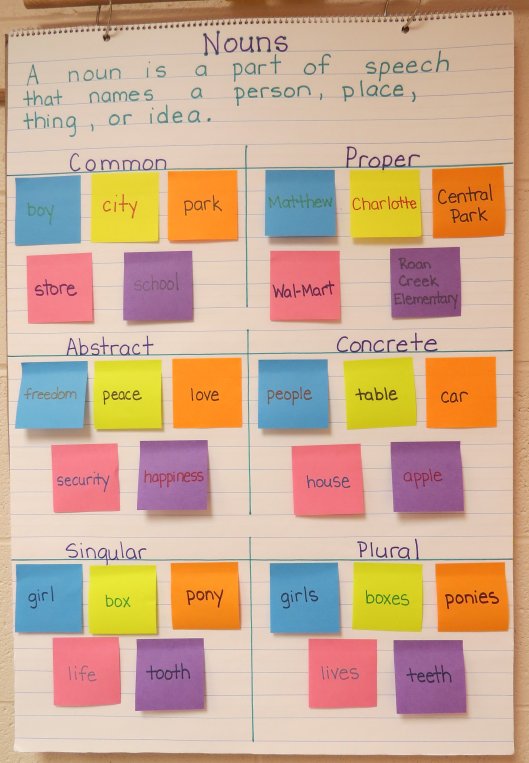
Language Arts: Word Work: Introduction to the Parts of Speech: Common and Proper Nouns, Abstract and Concrete Nouns
Reading: Focus: Description in Writing
Read Aloud: Milkweed
History: Integrated to Milkweed, (Non-violent) Images of Warsaw Ghetto, 1938-41
Computers: Reader's Response 18, Brainpop: Pearl Harbor, Zearn Math if time.
HW: Zearn Math, goal: through lesson 4.
Wednesday, Jan. 18
Math: Subtracting Fractions using calculation and drawings
HW Eureka Unit 3, Lesson 5. Math was rushed today with the Wednesday schedule and extra music class. Students should relax and try only problems they feel comfortable that they have a strategy for.
For support, here is a video of a teacher showing the subtraction of fraction using the "rectangular fraction model," (LINK or Video Below).
Please note that I have additionally taught a pure calculation model for addition / subtraction of fractions that I have also asked the students to do.
Music: Additional Class in preparation for performance
Language Arts:
Word Work: Common and Proper Nouns within the subject of Part of Speech
Reading: Introduction to Graphic Novels Unit
Characteristics of; Reading of an example: Garfield; and then a short summary and Reading Level of each book in our District Kit/Tub. Students made a list of their preferred choices. First books to be assigned tomorrow.
Thursday, January 19
Reading: Students Assigned Graphic Novels,
Lesson on Compare and Contrast of Principal Characters, application to small group book discussion.
Reading of Weedflower
Writing and discussion of questions, wonderings, and concerns connected to Weedflower and Milkweed
Word Work; Spelling exceptions for common plural nouns
Friday, January 20
Math: Eureka Lesson 6 - selected problems for whole group.
Perennial Group Students: 1:1 support of other students trying to master solving addition and subtraction of fractions with drawings. Working through of logic problem together.
Main group: Zearn Math Practice
Reading: Central Message or Moral of the Story in our Graphic Novels
Writing: use of senses and personal voice in a critique of a descriptive writing sample
Word Work; Spelling exceptions for common plural nouns
Tuesday, January 10, 2017
Academic Calendar and Connections
Tuesday, January 10
Students have been assigned to complete Descriptive Writing Essay Draft 2 at home. They began in class today, but due to our shortened day, they only had a 20 minute writing period to begin. No Math on Zearn necessary today. Thanks!
Wednesday, January 11
Mathematics:
Students were given a check-point quiz on finding calculating common denominators using cross multiplication. We are now moving next to topic 3 in Mission 3 of Zearn.Thursday, January 12
Mathematics:
Mr. Morris worked with Perennial Math students, I worked with students who needed re-teaching on finding a common denominator using cross multiplication of opposite denominators with both the numerator and denominator of the other fraction. The majority of students worked in Zearn Math.
There is no math homework today.
Language Arts:
The main thrust of language arts this week has been repeated editing of the descriptive essay they began last week. A third draft is due Friday, but we still have peer sharing and editing steps to complete before a final draft is written/typed next week. The students and I have analyzed together our 5th student descriptive essay on the topic: A Place To Have Fun.
Given the multiple revision process of this unit, students have been given time in class to type their essays with the idea that they can do their final revisions using a word processor. When they are finally evaluated, I should be given 3 versions showing a progression of their work that aligns with the topics covered in the separate critiques of the 5 model essays. The sequence has been: 1) Pretest Draft prior to instruction 2) Critique of Model essays 1-2-3; 3) Draft 2/optionally typed; 4) Model essays 4-5; 5) Third Draft. **Where we are now.**
Note that the third draft can be written into or added to typed 2nd drafts by the use of italicized sentences and these sentences should be descriptive using senses beyond only using sight. "On the teacup ride, you can hear the riders laughing and screaming as they turn around in circles."
Elements of study in the descriptive essay:
Elements I will look for include a rewritten introduction that includes a statement of the place to have fun; a preview the three sub-topics that will appear in the body paragraphs, and have one or more sentences written to expressly hook the reader.Forming body paragraphs organized around three different topics, usually places within the place they are describing. In one example, a model writing about having fun at the beach, included a paragraph about the sounds in a panorama of the beach; a second paragraph that was organized around the activities one commonly sees by beach-goers on the sand and emphasizes the sense of touch; and a third body paragraph of the activities one finds in the water itself and inclusion of the senses of taste, smell, as well as sounds.
The list of techniques for strong descriptive writing finally include: model structures; inclusion of most of the 5 senses in their descriptions; writing with a balance of describing by the details of a scene and showing action through active verbs; and how to see a scene as if they had on a camera pack and were alternatively panning/scanning the place mentally and zooming in the details of specific, unique, and fun things one can "see" and "do" at their fun place. Additionally, we have studied transition sentences and the use of descriptive adjectives.
Reading:
Students read their personal books and recorded examples of descriptive writing or text-to-text connections in their composition notebooks and shared these in small groups and a whole class setting.We Read Aloud from Milkweed, both today and yesterday.
Tuesday, January 3, 2017
Math Notes on Zearn Progress
Dear Families,
The Zearn online math program is really a strong math support for your child and we encourage its use both at school (in differentiation and extension) and at home (for practice and review).
Some students have devoted quite a lot of attention to practice on the program and I wanted to share some progress notes. In class we have worked through 2 Eureka Units. The Zearn program is aligned to these. There is also some significant correspondence between the number of completed lessons by students and their overall success in math this year.
Of our 27 students, looked at in roughly quartiles, the completion ranges have been between 0-2 lessons (7 students) and 11 - 21 lesson (6 students). The rest of the students lie in the large average range of 5 - 10 lessons completed.
There are 45 lessons available for the combined "Missions (Units)" 1-2. Student didn't begin the program until October 4. To this point I have provided approximately eight 20-30 minute sessions for students to use the program during math differentiation time (the time varied for each student) and the students had the option to do Zearn in our computer lab time for roughly 20 minutes most Tuesdays.
Please ask your child how many lessons they have completed and I encourage you to sit down one evening and see how the program works with her or him. I think a helpful goal would be for students to complete about 2 lessons per week at home. Especially on days there is minimal Eureka math homework, I'd suggest students spend about 20 minutes on the program and balance this with 20-30 minutes of their personal reading. If your schedule isn't full with other activities, Wednesdays would be a perfect day to knock out one lesson anyway.
Kudos to these 7 students for their extra commitment to their math studies using Zearn:
Isaiah, Will, Luke, Julia, Greyson, and Madelyn.
Kind regards,
Mr. Hagstrom
Academic Calendar and Connections for the week of January 3
Happy New Year - Welcome back letter from teacher (see earlier post).
Planners - Students wrote math and Language Arts planning notes. Parents and guardians, you may wish to review your child's planner together with your son or daughter..
Tuesday, January 3, 2017
Planners - Students wrote math and Language Arts planning notes. Parents and guardians, you may wish to review your child's planner together with your son or daughter..
Math: Module 3 - Fractions - Pretest. Students were awarded class stickers for their independent progress in the Zearn online math program. Please look for the related post with some helpful progress information. No specific math homework, however 20 minutes of math on Zearn is encouraged.
Science Project Notes & Link
Language Arts: Book Report No. 2 on a historical non-fiction, or historical fiction assigned. Hand-outs provided, we read through an example, and we spoke of expectations. The homework assignment won't be given a grade-score, but it will be evaluated, shared, and discussed in class both with peers and myself. Planners were marked. The students will have 6 weeks to do the report and it's due February 16. A copy is available on Mr. Arthur's site (linked here).
Wednesday, January 4
Math: Introduction to Fractions: Fraction Terms, Rules of Addition and Subtraction, Representing +/- of fractions in drawings. Rewriting Fractional expression using multiplication, Eureka Lesson 2 no.s 1-3 in class. HW Zearn math 20+ minutes
Homework:
Zearn Math 20 + Minutes;
Reading; Song lyrics Extra Credit for "Reader's Response" Week 16, A space has been added to the bottom of Reader's Response 16 to share the lyrics. Extended lyrics deadline: Sunday.
Writing: We examined two student writings with an eye toward how to write the introduction and structure the paragraphs of a descriptive writing essays. Students rewrote their introductions from their first draft.
Thursday, January 5
Math: Equivalent Fractions, Lesson 1
Zearn Computer Math Learning
Perennial Math Group with Mr. Morris (thank you, Tim).
Math Homework: Zearn 20+ in Mission 3 beginning with Equivalent Fractions in place of worksheet.
Writing: Students did a descriptive writing sample essay with a title: "A Place to Have Fun"
Conversation starter: Ask about what we read about Sumika in Weedflowers.
Math: Fractions. Return to Unit 2. Showing relationships between improper fractions and mixed numbers, how to show addition of improper fractions on a number line, how to see improper fractions as the sum of equivalent partial fractions, and draw them in pictures.
Students who skipped the minimum Zearn requirement for yesterday, were requested to attend to that as homework this weekend. Others were invited to work on it optionally, including to return to earlier skipped lessons.
Addison G. Glad to see you're stepping up to Zearn from back east😄
Math Homework: Zearn 20+ in Mission 3 beginning with Equivalent Fractions in place of worksheet.
Writing: Students did a descriptive writing sample essay with a title: "A Place to Have Fun"
Conversation starter: Ask about what we read about Sumika in Weedflowers.
Friday, January 6
Math: Fractions. Return to Unit 2. Showing relationships between improper fractions and mixed numbers, how to show addition of improper fractions on a number line, how to see improper fractions as the sum of equivalent partial fractions, and draw them in pictures.
Students who skipped the minimum Zearn requirement for yesterday, were requested to attend to that as homework this weekend. Others were invited to work on it optionally, including to return to earlier skipped lessons.
Addison G. Glad to see you're stepping up to Zearn from back east😄
Writing: We examined two student writings with an eye toward how to write the introduction and structure the paragraphs of a descriptive writing essays. Students rewrote their introductions from their first draft.
Science Projects
Our Class did a spectacular job developing team and individual PowerPoint presentations from our non-fiction science reading unit principally on endangered animals. One each was presented throughout the months of November and December as time allowed and teams of students' evaluated each other's using rubrics on ten points. There were many outstanding projects and these have been posted on line in a folder of shared materials that you can access from the "Helpful Links" at the right. The Presentations are in the Science Presentations folder. To preview an example of the fine work our students did, here is Madelyn, Marika, and Isabelle's presentation on Penguins. To see the fun presentation transitions, I recommend downloading the file first and playing it on your device.
Bravo!
- Mr. Hagstrom
Happy New Year!
Dear Students (and families),
We begin the New Year after building together a strong, kind, and thoughtful community in our classroom. I appreciate all of your efforts, (often) bright and smiling faces, and regular consideration for others. I can't wait to begin anew and see how we even sharpen and soften our work and approach.
By this I mean that we have much to dig into and we need to be smart about that to be able to use our time well. At the same time, however, we need to be reflective - to look at how we do our work and learning - and to reaffirm these ideas of being kind, helpful, and open-minded as we do it. Sometimes this means we do things slowly on purpose to get it right.
My holiday was a nice and relaxing time. I had family in town and we enjoyed little Blake being his amazing self and we made a couple trips into the Seattle area, including a visit to Wunderkind Lego coffee shop and my first island trip visit to Bainbridge for a day. My mom made some favorite food from my childhood - Swedish Chili - and we ate lots (too many perhaps) of yummy cookies and desserts, including ridiculously good and pretty elegant Bundt Cakes (thanks, you-know-who). I drank lots of my favorite beverage - coffee at Starbucks (thanks for those cards). In fact all the gifts I received was basically overwhelming and I am humbled and grateful at you and your families' kindness. Cheers to you. I hope your holidays were equally fun, memorable, and spent with people close and dear to you.
I found a little time to consider our next read aloud now that we have shared Wonder together. That's a tough act to follow, but my colleague, Mr. Arthur, recommended Milkweed by Jerry Spinelli and this does sound to be a gripping, powerful, and meaningful book. It has a male protagonist and is fast-moving, with some deep themes running through it. It is a historical novel that brings us into the period of World War II and has as a major theme the maltreatment of Jews in Europe at the time of the Nazis. I also thought of a different wonderful book that involves a young female protagonist closer to home. It's called Weedflower by Cynthia Kadohata. This will be an important addition to our study of American History. So we will be able to do our reading aloud, alternating between these two texts and using both like diving boards for rich conversations about books. Prepare to be amazed.
I so look forward to seeing each of you!
Welcome back,
Mr. Hagstrom
Thursday, December 15, 2016
Practice PowerPoint Problems for Unit 2 Test
We have our Unit 2 Test Friday Morning. Here is the study guide for 6 very similar problems to those on the test:
It's highly recommended to review 6 a-e. Remember, you will normally need to download the PowerPoints first.
Link to Powerpoint.
It's highly recommended to review 6 a-e. Remember, you will normally need to download the PowerPoints first.
Subscribe to:
Posts (Atom)